
Probate in Douglas County District Court
Probate in Douglas County is handled by the Probate Division or probate function of the Douglas County District Court. The court sits in the 23rd Judicial District and shares the Douglas County Courthouse / Robert A. Christensen Justice Center with County Court and the Clerk of Court. The courthouse address is 4000 Justice Way, Suite 2009, Castle Rock, CO 80109, and the main phone number is 720-437-6200.
Probate files commonly concern estates, wills, personal representatives, guardianships, conservatorships, trusts, inventories, accountings, notices, creditor claims, and closing documents. Some probate material is public, but guardianship and conservatorship files can include capacity, care, medical, financial, and protected-person information. Those materials should not be treated like ordinary public civil filings.
The Colorado Judicial Branch self-help forms catalog is the official source for current probate, estate, trust, guardianship, and conservatorship forms.
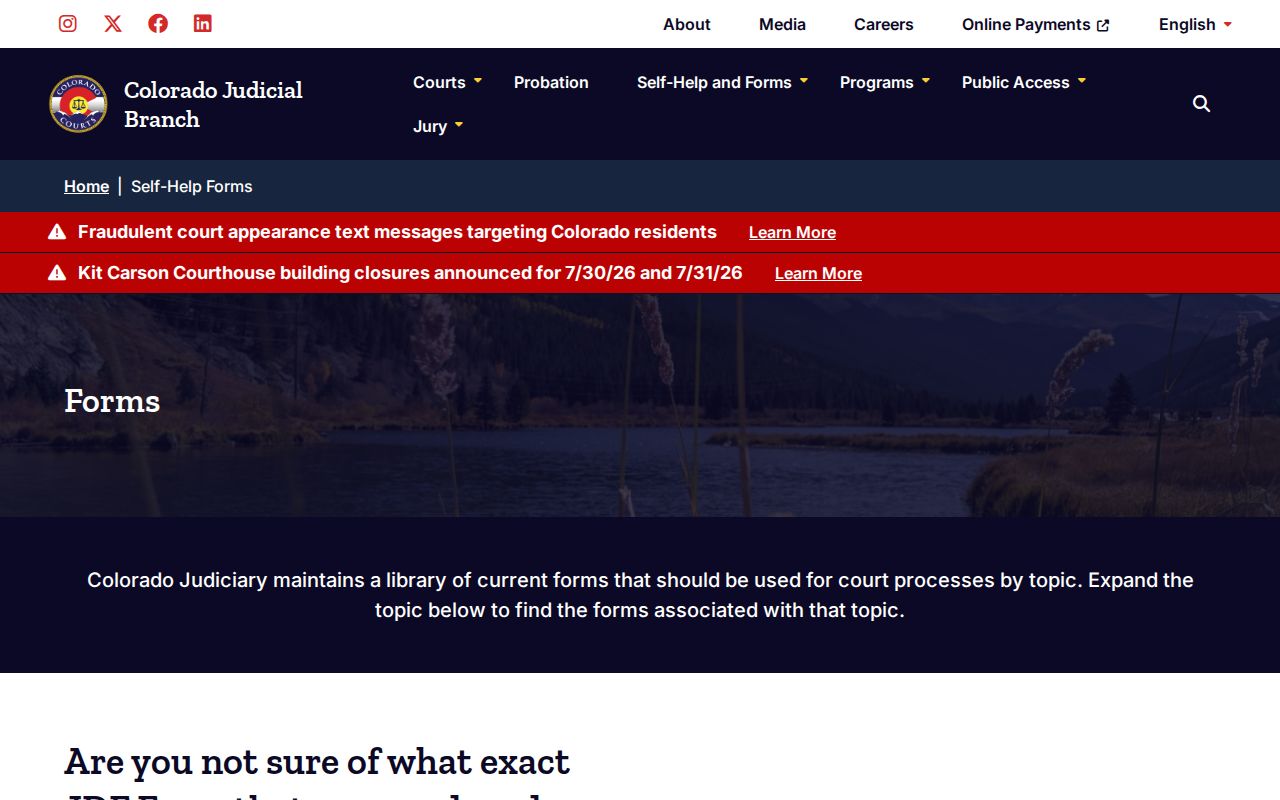
The forms catalog matters because Douglas County probate cases use statewide Judicial Branch forms even though filing and copy follow-up occurs through the local District Court.
Probate Contact Card
Douglas County District Court Probate Division
Courthouse: Douglas County Courthouse / Robert A. Christensen Justice Center
4000 Justice Way, Suite 2009
Castle Rock, CO 80109
720-437-6200
Records email: DouglasRecords@judicial.state.co.us
Hours: Monday-Friday, 7:30 a.m.-4:30 p.m.
Use this court contact for probate case-file copies, probate hearing questions, transcript requests, and local clerk follow-up. County CORA requests and Clerk and Recorder recorded-document searches are not substitutes for a probate case-file request.
Probate Definitions
Probate terminology identifies the person, property, and fiduciary roles in the case. These definitions are practical search terms when looking for a Douglas County probate record.
- Estate
- The court matter involving a deceased person's property, debts, heirs, devisees, and administration.
- Will
- A document offered to show how a decedent wanted property distributed.
- Personal representative
- The fiduciary appointed to administer an estate; older forms or informal language may say executor.
- Letters
- A probate document showing the personal representative or fiduciary has authority to act.
- Intestate
- A death without a valid will, requiring administration under Colorado succession rules.
- Guardianship
- A case appointing someone to make care or personal decisions for a minor or protected adult.
- Conservatorship
- A case appointing someone to manage money or property for a protected person.
- Inventory
- A filed listing of estate or protected-person property, often containing financial information.
- Accounting
- A report of receipts, disbursements, and fiduciary activity.
How to Search Douglas County Probate Records
Colorado does not provide full probate document images directly from the Judicial Branch website. Start with docket information if a hearing date is needed, then request the case file or specific documents from the court. Commercial register-of-actions access may show limited case activity, but the Judicial Branch access guide says copies of documents must be obtained from the court where the documents were filed or through the online records request process.
- Identify the probate case type: estate, will, guardianship, conservatorship, trust, small estate, or related filing.
- Use the statewide Colorado docket search for hearing information if a probate hearing is scheduled.
- Submit an online records request for probate case-file copies or email DouglasRecords@judicial.state.co.us with the case number, party or decedent name, and record requested.
- Call 720-437-6200 or visit/mail the courthouse if the matter is older, restricted, sealed, or hard to identify.
- Use Colorado Courts E-Filing only if you are an attorney or party with existing case access and the filing or request belongs in the case.
Estate, Will, Trust, and Fiduciary Case Types
The Judicial Branch forms catalog lists probate with a will, probate without a will, trusts, estates and wills, abandoned estate documents, affidavit for collection of personal property, opening an estate, closing an estate formally or informally, closing a small estate informally, registering out-of-state orders, domiciliary foreign personal representatives, inventory and accounting forms, setting a hearing, reopening an estate, and trust registration statements.
Guardianship and conservatorship forms are listed separately for adults and minors. That distinction matters for records access: an estate file about a decedent's property may have a different public-access profile than a protected-person case that includes medical capacity, care planning, finances, or minor information.
Probate Fee Schedule
The research file directs probate filing fees to the Colorado Judicial Branch fee list and does not capture exact probate filing amounts. The fee facts below are the captured official fee facts relevant to probate copies, e-filing, scanning, and retrieval. Exact probate filing fees should be verified on the Judicial Branch fee list before filing.
The official Colorado Judicial Branch fee list is the statewide source for court filing, copy, scanning, search, and retrieval charges.
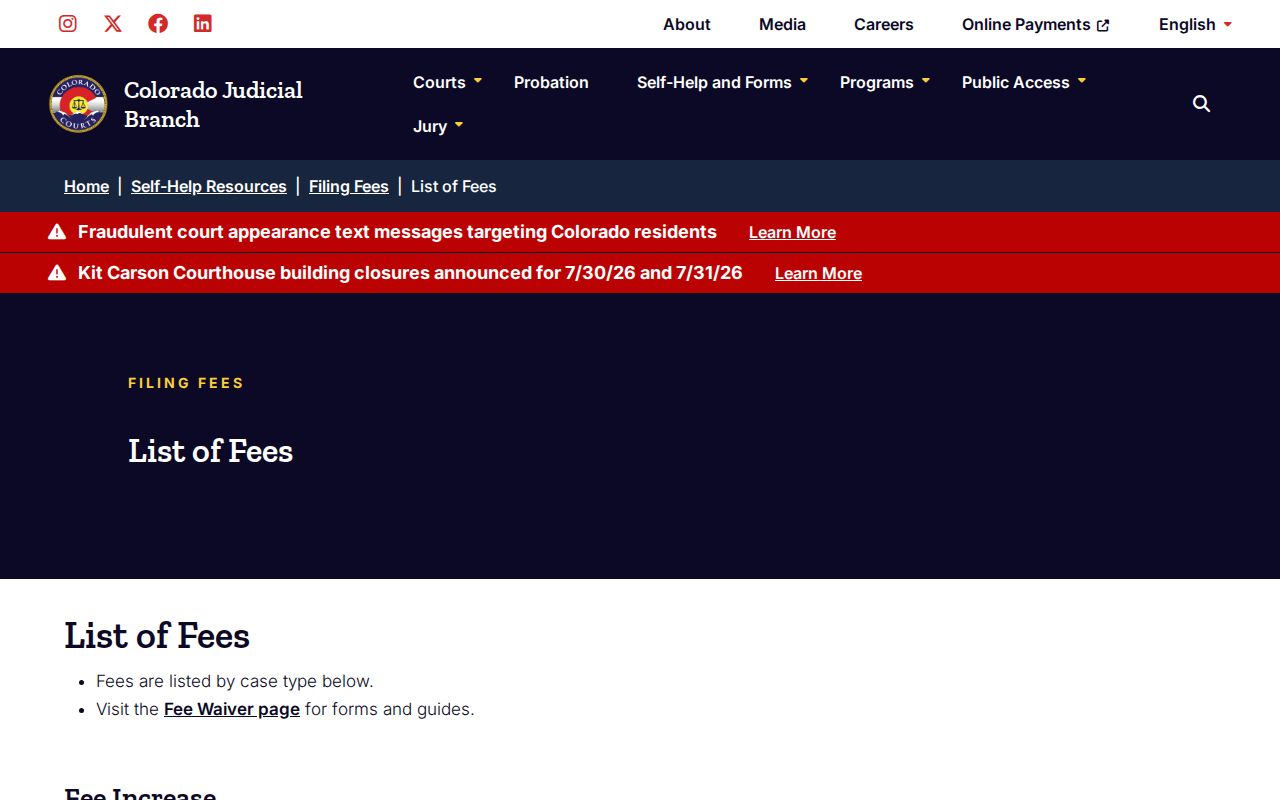
Using the statewide fee list avoids mixing Douglas County court fees with county recording fees or unofficial probate fee summaries.
| Item | Amount or Note |
|---|---|
| Probate filing fees | Verify current amounts on the Colorado Judicial Branch List of Fees. |
| Copy fee for parties | $15 maximum copy fee for parties to a case. |
| Judicial scanning fee where e-filing is mandatory | $50 per document. |
| Non-attorney e-filing fee | $12 per filing; not charged until accepted. |
| Tape/CD transcript duplication | $35. |
| Search/retrieval fee | Varies. |
| Protection-order forms or packets | No fee; included because some protected-person issues overlap courthouse services, not probate filing. |
What Probate Records Show
A Douglas County probate file may show the case number, estate or decedent name, protected person or minor, case type, petitioner, applicant, personal representative, guardian, conservator, attorney, filing date, hearing dates, orders, letters issued, inventory deadlines, accounting deadlines, notices, creditor claims, closing documents, and docket activity. A docket result is not the full file; it is a schedule or event view.
Copies may be plain or certified depending on the use. Banks, title companies, out-of-state courts, and other agencies often require certified letters or certified orders. The requester should identify the exact document needed rather than asking generally for the entire probate file, especially when restricted material may need review.
How Probate Moves Through Court
The basic Douglas County probate path starts by deciding whether there is a will and whether the estate qualifies for a small-estate affidavit or needs formal or informal probate. The filer uses Judicial Branch Trusts, Estates and Wills forms, files in Douglas County District Court when venue is proper, requests appointment of a personal representative or fiduciary, receives letters if appointed, gives required notices, files inventory and accounting materials as required, administers creditor and heir issues, then closes the estate formally or informally.
Guardianship and conservatorship cases follow a more protective process because the court is dealing with care, capacity, property management, or minor interests. Those cases may have reports, plans, reviews, and restricted exhibits that ordinary public users cannot inspect in the same way they inspect a simple estate docket.
Restricted Probate Documents
Probate access can be limited when the filing includes protected-person information, medical reports, mental health details, minor information, financial account numbers, sealed documents, or materials restricted by court order. Public copies may be redacted. The clerk may require proof of party status, attorney appearance, or a court order before releasing protected parts of a guardianship, conservatorship, or capacity-related file.
The manifest also includes the U.S. Attorney District of Colorado contact page, which is a federal contact source rather than a Douglas County probate filing channel.
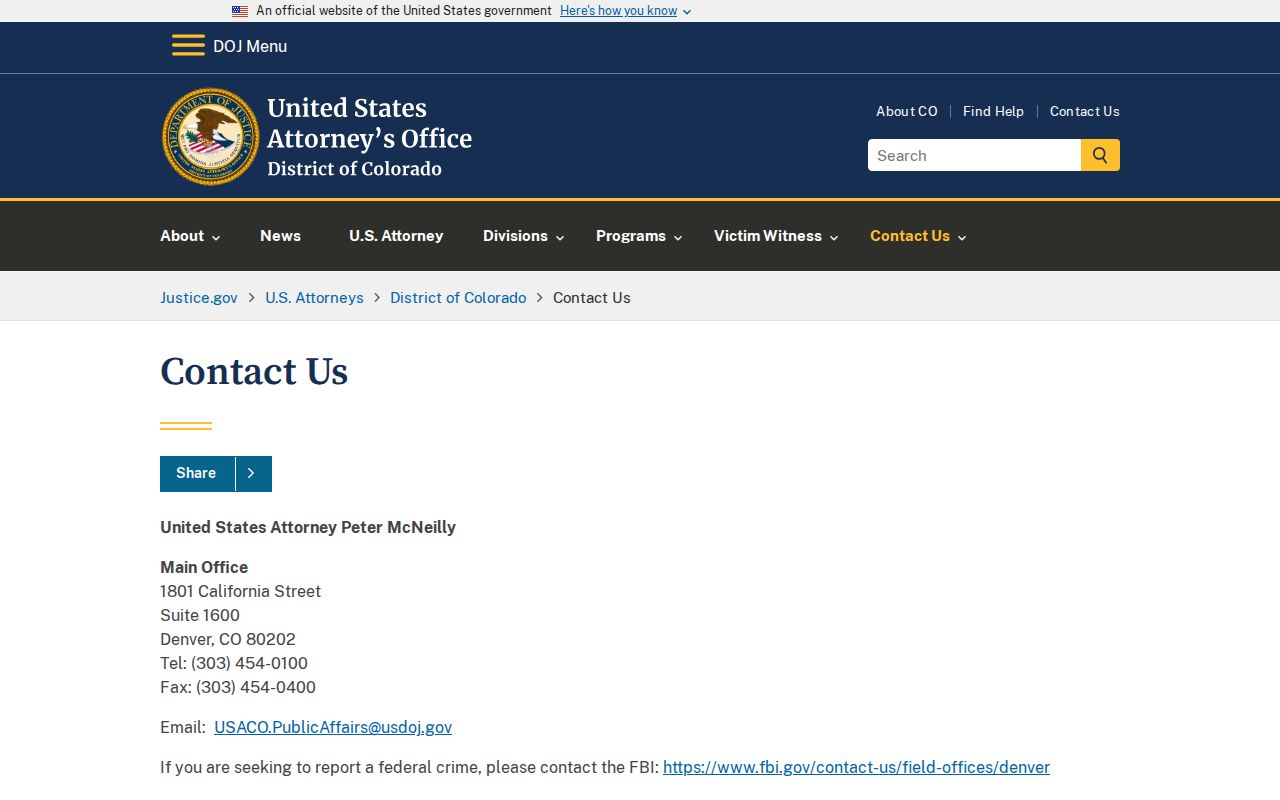
Federal contacts are separate from Douglas County probate records; use them only when the matter is actually federal, not because an estate or fiduciary dispute is pending locally.